

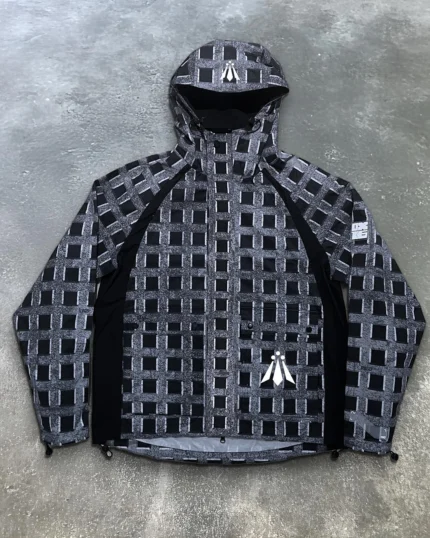
Stand near a busy station on a Friday afternoon and watch the clothes rather than the timetable. A commuter might wear a shell jacket over office trousers, while a group of friends waiting nearby might favour baggy jeans, graphic tees and sports-inspired layers. Their outfits occupy the same space without belonging to the same scene. London’s ability to accommodate these differences is part of what makes its streetwear interesting. The London-based label ox16 sits within this wider landscape, offering designs that combine familiar casual shapes with expressive graphics. Its collection provides a starting point for considering how urban fashion acquires meaning through everyday wear.
Clothes as a record of interests
Streetwear is frequently associated with particular activities and creative communities, but the link between an outfit and the wearer’s interests is rarely straightforward. A person might wear a music-themed tee because it reminds them of a memorable evening, or simply because the artwork appeals to them. The same visual reference can carry different meanings for different people.
That flexibility is valuable in a city where people encounter many forms of expression each day. Rather than asking whether a garment belongs to a particular group, it is more interesting to ask what it brings to the outfit. Does the imagery start a conversation? Does the shape relate to something already in the wardrobe? Those personal connections help clothes feel less anonymous.
OX16 and the role of graphic design
The graphic tee can operate almost like a poster worn on the body. Placement, lettering and colour affect the way an image is perceived, while the movement of fabric changes its appearance throughout the day. An illustration that looks small on a flat product photograph may become the clearest part of an outfit when worn.
Among the store’s listed T-shirts is the DJ Deck Tee, whose name suggests a music-related visual theme. It provides an example of how garments can invite cultural associations without requiring the rest of the outfit to follow a particular uniform. A plain jacket and trousers allow such a piece to remain visible. Alternatively, a wearer can deliberately use more expressive accessories if that suits their individual taste.
The space between sportswear and casual fashion
Sports-influenced shapes are now familiar in ordinary urban wardrobes. Their usefulness comes partly from the ease with which a track jacket or joggers can be combined with other separates. The same garment may be worn for travelling, relaxing or meeting friends, even if it was originally inspired by clothing associated with physical activity.
There is an interesting distinction between appearance and function here. A sports-style jacket does not necessarily have performance characteristics suited to competitive training. Equally, a pair of trousers designed for everyday wear may be chosen for its outline rather than technical construction. Understanding what a piece is intended to do allows the wearer to make better choices without reducing streetwear to a collection of athletic references.
Individuality within a recognisable look
Many outfits share a common foundation: casual trousers, trainers and a relaxed upper layer. What distinguishes them is the way those elements are selected. Some people use contrasting colours; others prefer a particular trouser shape or a recognisable pattern. Repeated personal choices can be more memorable than a different statement garment every week.
The patterned zip hoodies and coordinated separates found in ox16 clothing illustrate two approaches to that visual identity. One introduces a noticeable detail within a single garment; the other creates coherence across multiple pieces. Both leave room for the wearer to make decisions about shoes, fit and accessories. Streetwear becomes interesting when those choices reflect a person rather than an advertising image.
Why clothing drops generate discussion
A scheduled or limited release changes the way people discover clothing. Instead of encountering a collection only through a seasonal display, shoppers may discuss a forthcoming design, compare images and decide whether it is something they want. That anticipation can create a social dimension around otherwise ordinary garments.
There is also a disadvantage. The perception of scarcity can make an item seem more appealing than it would under calmer circumstances. A purchase made primarily to avoid missing out may not suit the buyer’s wardrobe. The sensible response is to enjoy discovery while retaining the right to decline. If a release genuinely resonates, it should have appeal beyond the moment it first appears online.
How London’s daily routines influence styling
The city encourages practical experimentation. Long walks, crowded platforms and changes between indoor and outdoor temperatures give clothes a job to do. A zipped mid-layer can be adjusted, while comfortable shoes allow someone to move between activities without changing outfits. A small bag may be more useful than an accessory selected purely for appearance.
These decisions are part of style rather than interruptions to it. A cropped jacket worn over a longer tee creates one outline; fastening the jacket creates another. Sleeves pushed up indoors alter the relationship between the garment and the body. Watching how people adapt outfits throughout a day can offer more useful inspiration than observing carefully arranged fashion photographs alone.
Learning from the street without copying it
The most productive way to observe urban fashion is to notice relationships between garments. When an outfit catches your attention, ask whether the effect comes from colour, volume, texture or the position of a graphic. A simple note can help you experiment later with clothes you already own.
Avoid assuming that an entire neighbourhood shares a single aesthetic. Different people use the same streets for different purposes, and fashion changes with time, occupation and circumstance. London remains interesting precisely because its appearance is not fully predictable. Approaching street style with curiosity instead of rigid categories makes room for more personal interpretations of the clothing available.
Culture continues beyond the release date
OX16 offers one example of the contemporary London streetwear vocabulary, with printed artwork and casual silhouettes that people can interpret in their own ways. The broader culture, however, exists in the decisions made after the purchase: what gets combined, what is worn repeatedly and what becomes associated with a particular period of somebody’s life. A garment may begin as part of a collection, but its meaning develops through use. That continuing conversation between design and daily experience is what keeps urban fashion from becoming static.